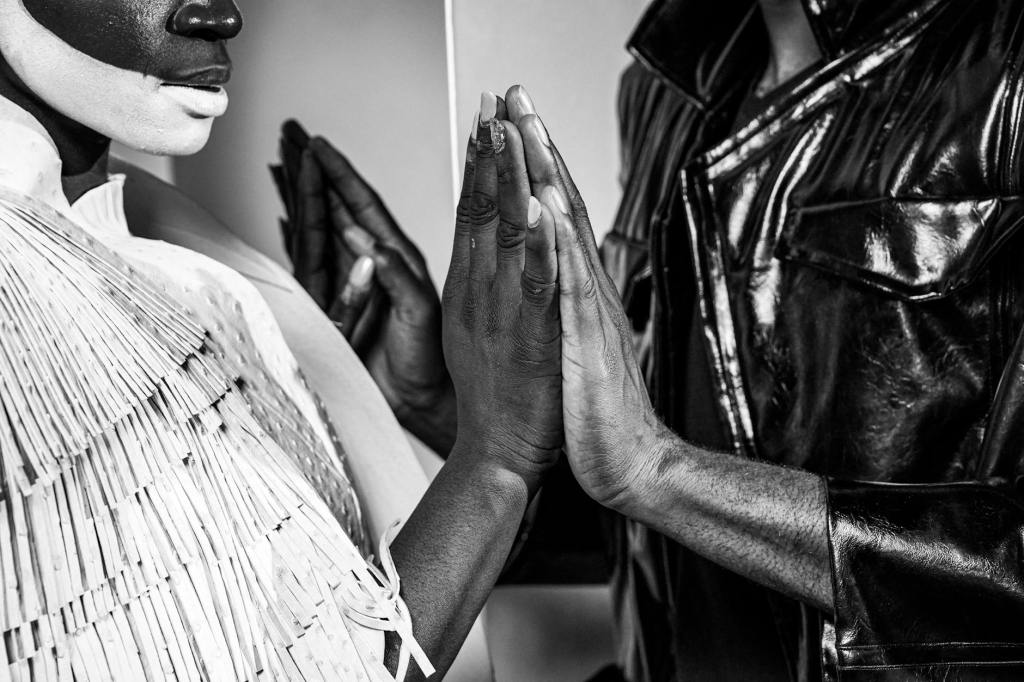
I wanted to touch on a subject that can be sensitive, but important and increasingly relevant (regardless of your gender):
Emotional intelligence is not the same as emotional vulnerability.
Music has been a large presence in my life lately, so to kick things off, here’s a little musical analogy:
A classically trained musician can read the most complex sheet music. They understand theory, harmony, and can execute a flawless performance of a piece someone else wrote. It’s safe, predictable. But that is a world away from being asked to improvise. For one to step onto the stage with no sheet music and create a melody from scratch, exposing their own ideas with the very real risk of hitting a wrong note.
The technical knowledge of the scales doesn’t eliminate the visceral, very normal, fear of playing something that isn’t perfect.
As we have all seen, our generation has become a generation of masters of the self. We have the sheet music. We’ve studied our patterns, we understand generational trauma, we know what a “healthy relationship” is supposed to look like. We have the emotional intelligence.
But why have we become so good at playing the notes perfectly? It’s not an accident. We are now told to build a career before even thinking about a partner. For safety. We learned the language of therapy, “setting boundaries,” & “protecting our peace”, and sometimes, we use it as a shield. For many of us, especially women, hyper-independence wasn’t a choice. Instead, it was a necessary armor in a world that didn’t always feel safe while being consistently overstimulated. The world has changed, and we’ve borne witness to it.
We now know the whole song by heart, but we stand frozen on the stage, afraid to play a single note that hasn’t been written for us.
But here’s the truth that we often forget, one that was hard for me to admit: A flawless performance in an empty hall is a lonely one. A life lived entirely in the safety of hyper-independence is a life half-lived. It keeps out the dissonance, but it also keeps out the incredible, life-altering experiences that can only come from connection. The irony is that in our quest to build an invulnerable self, we risk building a world with no one else in it.
As cliche as it sounds, love and community are the most important things in this world.
Mind you, I’m not talking about an “I’d die without you” anxious attachment love, nor a space filler. The goal isn’t codependence, y’all.
The goal is interdependence. Two musicians choosing to form a duo. Each is a master of their own instrument, but together, they can create a sound more beautiful and complex than either could alone.
The safety to be out of tune without being seen as a bad musician. It’s the freedom to play your own melody, knowing there is a steady rhythm section to come back to. It’s knowing that when your own fingers get tired, there’s someone willing to play with you for a while. Not because you’re weak, but because they’re strong enough to share the stage.
The next step for our generation, one that has mastered independence, is to find the courage to finally let go, and to open ourselves up to everything that life has to offer.
I’m proud of you all, and everything you have overcome.
A little Toolkit For You
Here I want to share some exercises that have helped me on my own journey with vulnerability, I hope they may be useful to you as well.
- This week, tell one trusted friend one small, real thing you’re struggling with. Not a crisis, just a small crack in your armor. See how it feels to be seen in a moment of imperfection.
- The next time someone gives you a genuine compliment, your only job is to say “thank you.” That’s it. Don’t deflect, don’t minimize. Just let the kindness land.
- Ask a friend to grab you a coffee, or for their opinion on a minor problem. The goal is to build the muscle of letting someone show up for you, proving that it’s safe to have a need.
* To be clear, while both 1. & 3. build trust, one teaches you it’s safe to be emotionally seen, and the other teaches you it’s safe to have practical needs. These are two separate and necessary skills to learn.
 Jessica Cole